Keep Your Ride Running Smoothly: Weekly Car Care Tips for Easy Maintenance
A few small checks each week can prevent surprise breakdowns, improve fuel economy, and help a vehicle last longer. The goal is a routine you can repeat in about 10 minutes—spotting changes early (a new leak, a new noise, a new warning light) before they turn into an expensive repair.
The weekly mindset: small checks, fewer big repairs
Weekly car care works best when it’s simple and consistent. Think in quick signals: look, listen, smell, and feel for anything that’s changed since last week. Fresh drips on the driveway, a belt squeal that wasn’t there before, or a steering vibration that shows up at a certain speed are all clues worth acting on.
Pick the same day each week (like Saturday morning) and do the same loop around the vehicle in the same order. Consistency makes “new” problems stand out. When you’re unsure about the right fluid type, tire pressure, or service interval, use the owner’s manual as the source of truth rather than guessing or mixing products.
10-minute weekly walkaround checklist
This is the fast routine that catches most common issues early:
- Tires: Check pressure when tires are cold. Scan for cuts, bulges, nails, and uneven wear that may point to alignment or suspension issues.
- Lights and signals: Confirm headlights, brake lights, reverse lights, and turn signals work properly. Replace a failed bulb promptly for safety and visibility.
- Fluids under the car: Look for fresh spots or drips. Clear water from A/C condensation can be normal; oily or colored fluid isn’t.
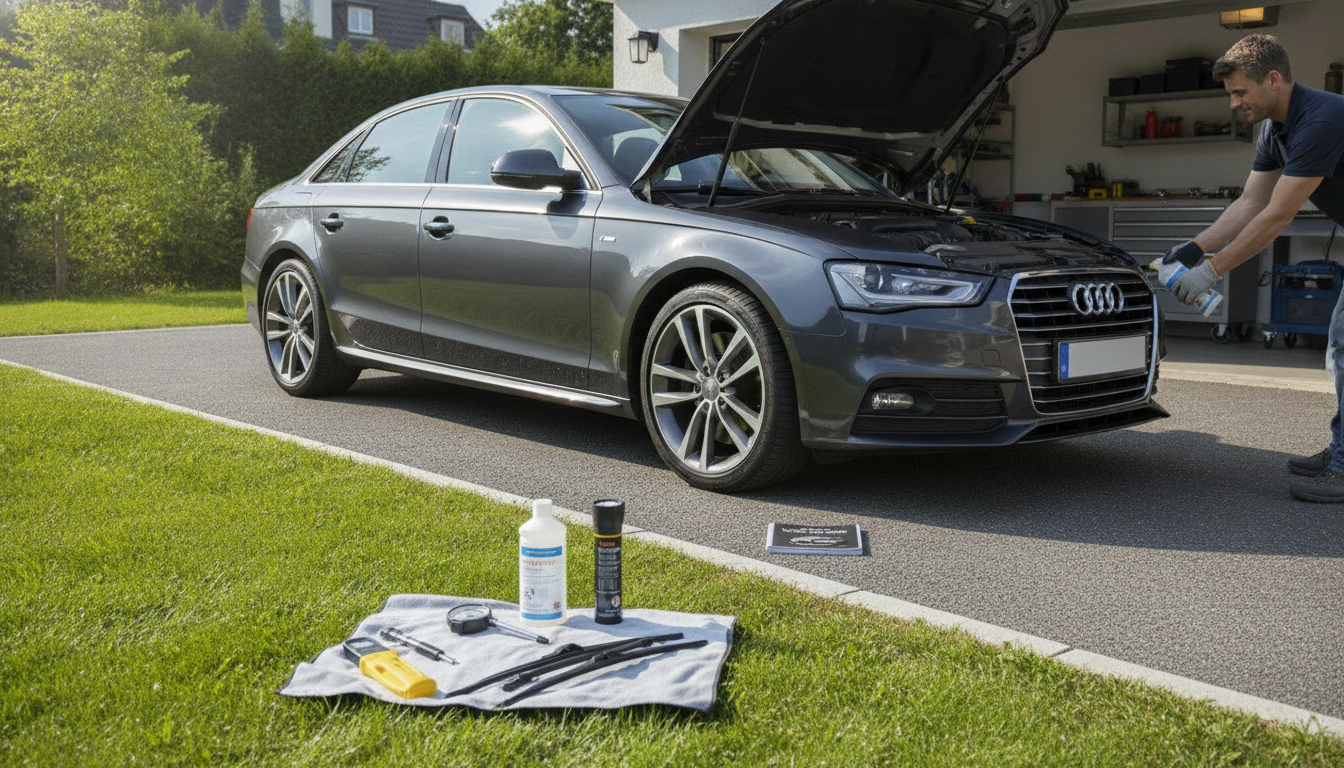
- Windshield: Top off washer fluid, check wiper blades for streaking or tears, and clean glass inside and out.
- Dashboard: Treat warning lights as “act now,” not “wait and see.”
- Quick listen test: Start the engine with the hood open. New ticking, squealing, grinding, or a rough idle deserves follow-up.
Weekly car care checklist (quick reference)
| Task |
What to look for |
Time |
Act now if… |
| Check tire pressure |
Matches door-jamb spec; stable week to week |
2 min |
One tire repeatedly drops pressure |
| Inspect tire tread/wear |
Even wear; no cords showing; no sidewall bubbles |
2 min |
Uneven wear, bulge, or visible damage |
| Look for leaks |
No fresh wet spots; no strong fuel/coolant smells |
1 min |
Fuel smell, oily puddle, or bright-colored fluid |
| Test lights |
All lights bright and consistent |
2 min |
Brake/turn signal out or flickering |
| Check washer fluid/wipers |
No streaking; blades flexible; fluid sprays evenly |
1 min |
Wipers chatter, smear, or visibility is reduced |
| Scan dash & listen |
No warning lights; engine sounds normal |
2 min |
Check engine light, overheating warning, loud squeal/grind |
Fluids: what to check weekly vs. monthly
Most fluids don’t need weekly topping-off, but weekly awareness prevents nasty surprises.
- Weekly: Windshield washer fluid, plus a quick scan under the vehicle for new leaks.
- Monthly (or every few weeks): Engine oil level (park on level ground), coolant level in the overflow tank (only when the engine is cold), and brake fluid level (avoid opening systems unnecessarily).
Use the exact fluid types listed in your owner’s manual. Mixing coolant types or using the wrong oil viscosity can cause performance problems—or damage. And never open a hot radiator cap; wait until everything is fully cool.
Tires and brakes: the two biggest weekly safety wins
If you only have time for two checks, make them tires and brakes. Proper tire pressure improves handling, traction, and stopping distance while helping fuel economy. Underinflation builds heat in the tire and raises the risk of a blowout.
While driving during the week, stay alert for clues: steering pull, vibration, or a rhythmic “thump-thump” that changes with speed often points to a tire or wheel issue. Brakes also communicate early—squealing, grinding, a soft pedal, vibration when braking, or pulling to one side should be inspected promptly.
For more tire safety guidance, review the NHTSA Tire Safety resource.
Battery, belts, and filters: quick checks that prevent no-start days
A dead battery or slipping belt can ruin a day quickly, but both often give hints first.
Cleanliness as maintenance: visibility, paint, and interior health
When a “small” symptom is urgent
A check engine light deserves respect. A steady light generally means “diagnose soon,” while a flashing light can indicate a severe misfire that may damage the catalytic converter—reduce speed and get service immediately. For a practical overview, see AAA’s guide to dashboard warning lights.
Tools and habits that make weekly care effortless
If you want a broader view of maintenance timing beyond weekly checks, the Car Care Council’s maintenance basics is a helpful reference.
FAQ
What should be checked on a car every week?
Check tire pressure and look for visible tire damage, confirm exterior lights work, look under the car for fresh leaks, top off washer fluid and inspect wipers, scan for dash warning lights, and listen for new engine noises.
How often should tire pressure be checked?
At least monthly and before long trips, but weekly checks are ideal because slow leaks and temperature swings are common and can change tire pressure quickly.
Is it safe to drive with the check engine light on?
A steady check engine light usually means you can drive carefully for a short time but should get diagnostics soon. A flashing light can signal a severe misfire—reduce driving and have the vehicle serviced immediately to avoid damage.
Recommended for you










Leave a comment