Stainless Steel Butter Knife & Cheese Cutter – A 3-in-1 Spreader Tool for Everyday Boards
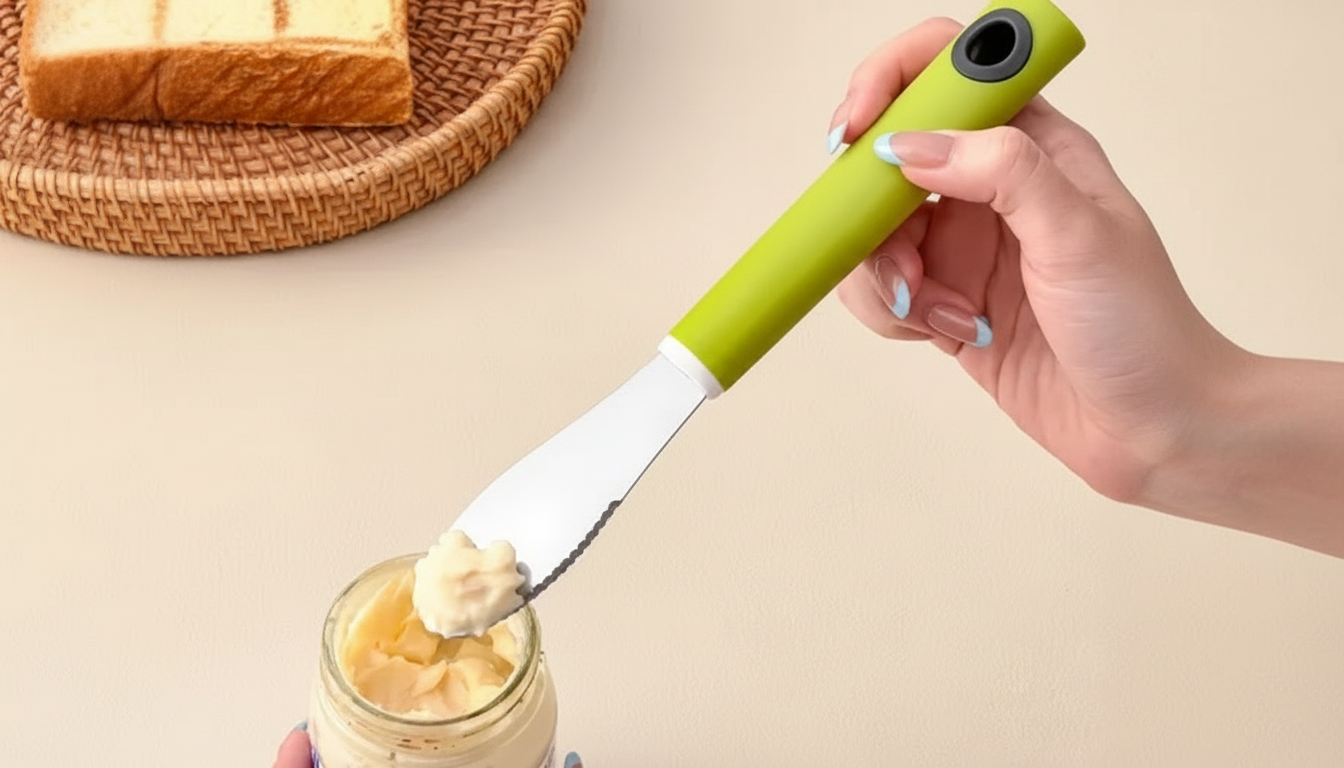
A compact stainless steel tool can make a surprisingly big difference when snacks and simple meals are part of the routine. The Stainless Steel Butter Knife & Cheese Cutter – 3-in-1 Kitchen Spreader Tool is designed to handle three everyday tasks—spreading, slicing, and portioning soft-to-semi-firm cheeses—without switching utensils. Its straightforward, board-friendly shape makes it easy to leave out at breakfast, keep with crackers for an afternoon break, or pack into a picnic kit when space is limited.
What the 3-in-1 tool does well
- Spreads butter, cream cheese, jams, and soft spreads smoothly with a wide, flat face.
- Slices and portions cheeses with a cutting edge designed for controlled pressure.
- Cuts clean lines on a cheese board while keeping hands farther from the cutting surface than with a small paring knife.
- Works as a quick serving utensil for crackers and toast—spread and serve with one tool.
- Fits small kitchens and travel setups where fewer tools matter.
Design details that matter in daily use
- Stainless steel construction supports durability and simple cleanup.
- One-piece feel helps reduce wobble during firm spreading and light slicing.
- Balanced, compact profile stores easily in a drawer, caddy, or board kit.
- Multipurpose edge is best for soft to semi-firm cheeses; very hard cheeses may require a dedicated hard-cheese knife.
For everyday boards, the biggest advantage is continuity: you can go from buttering toast to portioning brie without hunting for another utensil. That said, it’s still smart to match the tool to the food—if you’re serving aged cheeses that crumble or fight back, a dedicated hard-cheese knife or break-apart tool will feel more secure and controlled.
Quick guide: spreads, cheeses, and best uses
- Soft spreads (butter, hummus, nut butters): use the flat face and short strokes for even coverage.
- Soft cheeses (brie, chèvre): apply gentle pressure and wipe between cuts for cleaner portions.
- Semi-firm cheeses (havarti, young cheddar): use controlled sawing motions rather than pressing straight down.
- Serving boards: keep a damp cloth or small rinse cup nearby to reduce sticking and transfer between flavors.
Common uses and technique tips
| Food |
Best function |
Tip for cleaner results |
Notes |
| Cold butter |
Spreader |
Warm the knife briefly under hot water, then dry before spreading |
Avoid leaving butter residue on the edge if switching to slicing |
| Cream cheese |
Spreader |
Use the broad face and sweep from center outward |
Ideal for bagels and crackers |
| Brie or camembert |
Cutter + server |
Wipe after each slice to reduce sticking |
Room-temp brie slices more cleanly |
| Havarti / young cheddar |
Cutter |
Use short back-and-forth strokes |
Hard aged cheddar may need a sturdier blade |
| Jam / honey |
Spreader |
Use a light touch to avoid tearing toast |
Rinse between sweet and savory items |
How to use it on a cheese board (simple hosting workflow)
- Prep: bring soft cheeses closer to room temperature for smoother slicing and spreading.
- Place: keep the tool at the edge of the board with a small napkin for quick wipes.
- Portion: cut small slices first to set a clean “face,” then continue with consistent thickness.
- Serve: for spreads, scoop a small amount and spread on the cracker/bread rather than dipping repeatedly into the main portion.
- Reset: quick rinse or wipe between strong flavors (blue cheese, garlic spreads) to prevent carryover.
This workflow keeps the board looking tidy, reduces flavor transfer, and makes it easier for guests to serve themselves without turning the cheese area into a sticky mix of crumbs and smears.
Cleaning and care for stainless steel tools
- Wash promptly after dairy and sticky spreads to prevent residue from drying on the surface.
- Use mild dish soap and a soft sponge; avoid abrasive pads that can scratch the finish.
- Dry after washing to reduce water spots and keep the tool looking polished.
- If dishwasher-safe in your routine, place it securely so it doesn’t rattle against harder utensils.
- For odors (garlic spreads), rinse, then wash again with warm soapy water and dry thoroughly.
For general kitchen hygiene best practices—especially when utensils touch dairy, hands, and shared serving surfaces—authoritative guidance on cleaning and sanitizing is helpful. See the USDA’s “Clean” recommendations for safe food handling (USDA FSIS — Kitchen Companion: Clean) and the FDA Food Code for retail/serving sanitation principles (FDA — Food Code (2022)). For practical dishwashing tips and residue removal, the American Cleaning Institute also offers helpful guidance (American Cleaning Institute — Dishwashing).
When a 3-in-1 tool is the right choice (and when it isn’t)
Product options (in stock)
FAQ
Can it cut hard cheeses like parmesan?
It’s best for soft to semi-firm cheeses. Very hard aged cheeses are typically safer and easier to portion with a dedicated hard-cheese knife or a break-apart style tool.
How do you keep soft cheese from sticking to the blade?
Let the cheese warm slightly, use gentle strokes, and wipe the tool between cuts. A quick warm-water rinse followed by drying can also help reduce sticking.
Is stainless steel safe for food contact and easy to sanitize?
Stainless steel is widely used for kitchen tools because it cleans well and holds up to regular washing. Use hot soapy water, rinse thoroughly, and dry; follow standard food-safety guidance for utensils and serving boards.
Recommended for you












Leave a comment