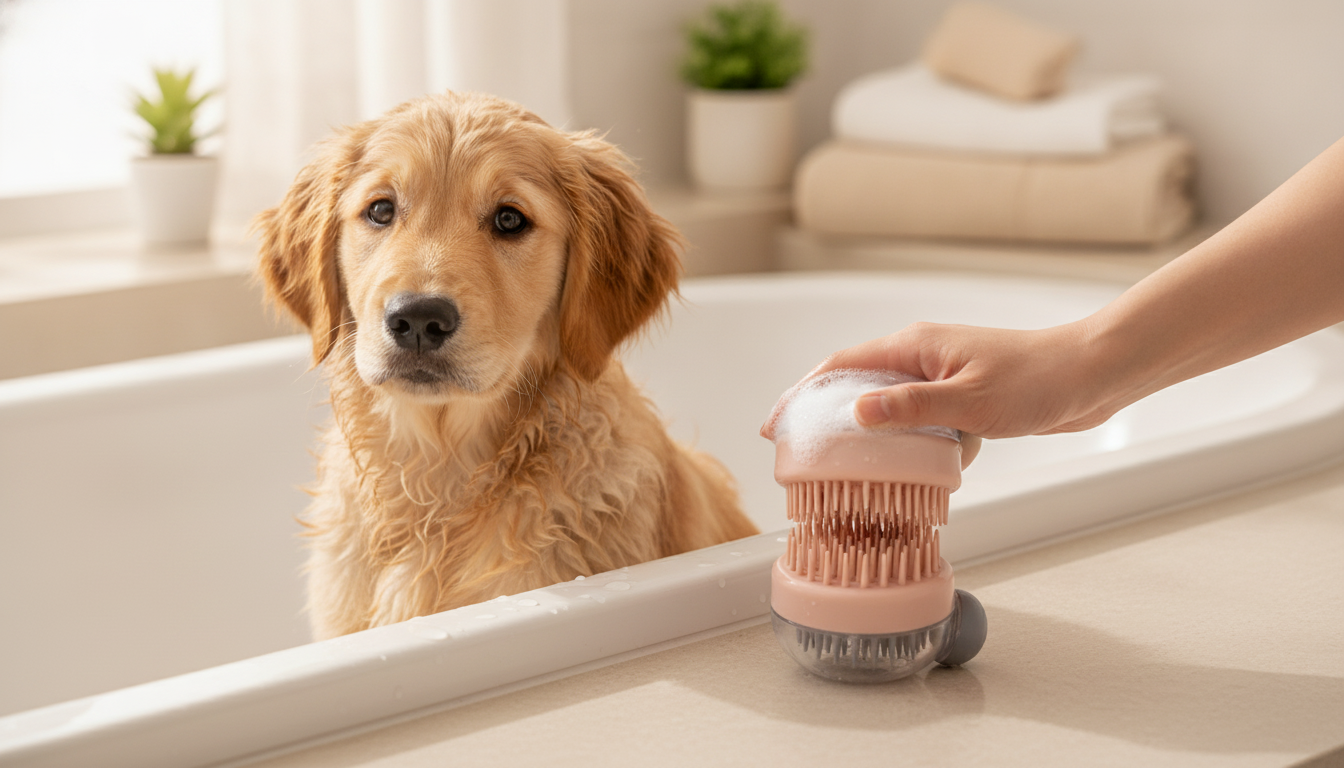
Bath time goes smoother when scrubbing and rinsing are efficient and comfortable. A soft silicone bathing brush helps lift dirt and loose hair while gently massaging the skin—useful for short coats, long coats, and sensitive pets when paired with the right shampoo and technique. For more guidance, see Best Dog Accessories We’ve Tested and Evaluated.
For a simple, budget-friendly upgrade to your grooming routine, the Soft Silicone Pet Bathing Brush for Dogs and Cats is an easy add-on to keep near the tub or sink. For further reading, see How to Choose the Right Dog Brush for Your Pet.
What a Soft Silicone Bath Brush Helps With
- Works shampoo through the coat more evenly than hands alone
- Loosens dirt, dander, and shed hair so it rinses away faster
- Gentle massage action can help relax pets during baths
- Helps reach tricky areas like the chest, legs, and base of the tail
- Useful for dogs and cats; adjust pressure and session length to pet comfort
Key Features to Look For
- Soft, flexible silicone bristles that bend rather than scratch
- Comfortable grip that stays secure with wet, soapy hands
- Compact size for control around the face, paws, and underbelly
- Easy-to-clean material that rinses quickly and dries without holding odor
- Durability: silicone that keeps its shape after repeated use
How to Use During a Bath (Gentle Routine)
- Brush before bathing to remove tangles and reduce shedding in the tub (especially for long coats).
- Wet the coat thoroughly; apply shampoo to hands or directly onto the coat as directed on the label.
- Use light pressure and small circular motions; start at the back and sides, then move to legs and chest.
- Avoid eyes, inside ears, and sensitive areas; switch to fingertips for the face.
- Rinse thoroughly—residual shampoo is a common cause of itchiness.
- Finish with a towel dry and a quick comb-through for long-haired pets.
If you’re unsure how often to bathe, the American Kennel Club offers practical guidelines based on coat type and lifestyle: How Often Should You Bathe Your Dog?
Dog and Cat Bathing Tips by Coat Type
- Short coats: use gentle, steady circles to lift loose hair; avoid over-scrubbing.
- Double coats: work in sections; ensure deep rinsing to prevent shampoo getting trapped.
- Long or curly coats: detangle first; use the brush mainly to distribute shampoo and minimize knots.
- Sensitive skin: reduce pressure, shorten sessions, and choose a pet-safe shampoo designed for sensitive skin.
- Cats: keep the session calm and brief; consider a damp wash routine if full baths are stressful.
Quick Guide: Pressure and Technique
| Pet/Coat Type |
Best Technique |
Pressure Level |
Common Mistake to Avoid |
| Short-haired dog |
Small circles along back/sides |
Light–medium |
Scrubbing too hard on bony areas |
| Double-coated dog |
Work in sections; rinse between passes |
Light |
Not rinsing thoroughly |
| Long-haired dog |
Pre-brush; gentle passes with direction of coat |
Light |
Creating tangles by going against the coat |
| Cat (most coats) |
Short, gentle strokes; keep face area hand-only |
Very light |
Extending the bath too long |
For cat-specific grooming best practices (including when to keep it simple with brushing and spot-cleaning), see the ASPCA’s guidance: Grooming Your Cat.
Care and Cleaning
- Rinse the brush immediately after use to remove shampoo and hair.
- Use a mild soap and warm water periodically; rinse fully.
- Air-dry bristles-down or on a ventilated surface to reduce odor.
- Inspect bristles for damage; replace if the surface becomes rough or cracked.
- Store away from direct heat to keep silicone flexible.
- Designed for bathing and coat cleaning for both dogs and cats
- Soft silicone bristles support gentle scrubbing while distributing shampoo
- Compact, easy-to-rinse design suited for routine grooming at home
- Budget-friendly option for frequent bath schedules
- In stock and ready to ship
Shop In-Stock Picks
Before choosing, compare the product details with your daily routine, available space, care needs, and preferred setup. The strongest option is usually the one that fits the intended use clearly and remains simple to clean, store, and check before repeat use.
FAQ
Is a silicone bathing brush safe for cats?
Yes, when used gently. Keep pressure very light, avoid the face and ears, and stop if your cat shows signs of stress (tense body, rapid breathing, growling, or trying to escape).
How often should a dog be bathed with a brush like this?
It depends on coat type, lifestyle, and skin sensitivity. Many dogs do well every few weeks, while others need less frequent baths to avoid dryness—especially if they have sensitive skin.
Can this help reduce shedding?
It can help by loosening and lifting shed hair during the bath so it rinses away. For best results, pre-brush before bathing and rinse thoroughly to carry loosened hair out of the coat.
Recommended for you













Leave a comment