A dependable pet carrier should handle daily wear, keep pets secure, and stay comfortable from short errands to longer travel days. Durability isn’t just “thick fabric”—it’s a mix of strong structure, reliable closures, supportive flooring, and materials that stand up to repeated cleaning. Below is a practical breakdown of what to look for when choosing a carrier for dogs and cats, plus habits that keep it ready for the next vet visit, car ride, or weekend trip. For more guidance, see 2015 Carrier Study Results.
What “Durable” Means in a Pet Carrier
A carrier can look sturdy on day one and still fail when it’s lifted, set down, or jostled in real life. A truly durable carrier is built to stay stable and secure through repeated use. For further reading, see Traveling With Pets? Follow These Expert Dos and Don’ts ….
- Frame and structure that resists collapsing when lifted or set down.
- Reinforced seams and high-stress stitching around handles, zippers, and corners.
- Materials that tolerate scratching, light chewing, and repeated cleaning.
- Reliable closures that stay shut while still opening smoothly for the owner.
- Ventilation panels that don’t warp or tear with use.
- Supportive base that carries weight evenly to prevent sagging and pressure points.
For travel guidance that prioritizes pet safety, it’s also worth reviewing veterinarian-backed tips like the AVMA’s recommendations for preparing pets for trips (American Veterinary Medical Association).
Choosing the Right Size for Dogs and Cats
Durability won’t matter if the fit is wrong. A carrier that’s too small can force a cramped posture, while one that’s too large can let a pet slide during movement (which can increase stress and nausea).
- Measure pet length (nose to base of tail) and height (floor to top of shoulders) to avoid cramped posture.
- Aim for enough room to stand, turn around, and lie down naturally.
- Account for growth for young pets, but avoid oversizing that allows sliding during movement.
- Check any travel requirements (airline, train, rideshare) for maximum external dimensions.
- Confirm weight capacity and how the base distributes load.
Quick sizing and feature checklist
| Need |
What to look for |
Why it matters |
| Secure entry |
Sturdy zipper or latch with smooth track |
Reduces escape risk during loading and unloading |
| Comfortable base |
Firm, supportive bottom + removable pad |
Helps prevent sagging and improves stability |
| Breathability |
Multiple ventilation panels/windows |
Supports airflow and helps reduce overheating |
| Easy handling |
Reinforced handles and/or shoulder strap |
Less strain for the owner and fewer drops |
| Simple cleaning |
Wipeable surfaces, removable liner, washable insert |
Keeps odors and buildup under control |
If flying is on the calendar, confirm current rules directly with your airline and review general standards for live-animal transport (IATA Live Animals Regulations overview).
Materials and Build Details That Hold Up
Durability is usually decided at the stress points: corners, zippers, handle anchors, and the bottom panel. When comparing carriers, look for construction choices that prevent common failures.
- Outer shell: tough, tear-resistant fabrics that don’t fray easily at corners.
- Mesh panels: tightly woven mesh with reinforced edges to resist clawing.
- Base support: rigid insert or structured bottom that stays flat under load.
- Hardware: durable clips, D-rings, and buckles that don’t bend under normal use.
- Stress points: bar-tack stitching or doubled seams on handles and strap anchors.
A quick test while shopping: hold the carrier by the handle(s) and lightly shake it. A well-built carrier keeps its shape, and the bottom stays firm rather than bowing.
Safety and Comfort Features to Prioritize
Secure doesn’t have to mean stiff or scary. The most usable carriers balance safety, airflow, and calmer handling so pets don’t feel like they’re being “dumped” into a moving box.
For broader travel preparation tips—like acclimating your pet and planning for breaks—see the ASPCA’s travel guidance (ASPCA).
Everyday Use: Car Rides, Vet Visits, and Short Walks
Care and Cleaning for Long-Term Durability
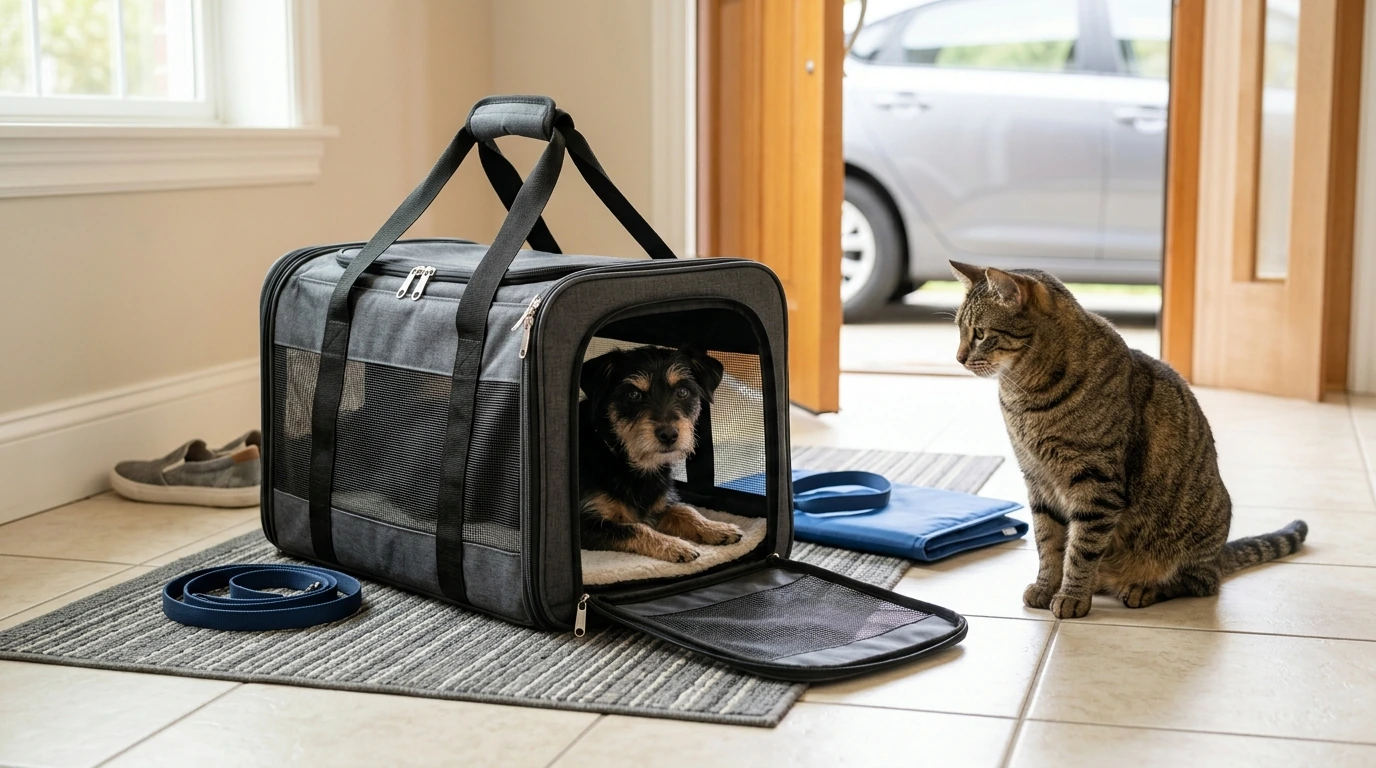
If a single carrier needs to handle routine outings without feeling flimsy, a structured, repeat-use design makes day-to-day life easier. The Durable Dog Cat Carrier is built for regular errands and common scenarios like vet appointments, short travel, and quick neighborhood trips—especially when one carrier is needed for both cats and small dogs. Pairing it with a familiar blanket or supportive pad can also help reduce stress by adding a known scent and softer footing.
Helpful add-on for travel days
For pet parents who like keeping a compact cleanup kit in the car or bag, the Double-ended Portable Makeup Brush can be repurposed as a small tool for gently dusting lint and hair off carrier fabric (especially around seams and corners) between deeper cleanings.
FAQ
How can a carrier be made more comfortable for a nervous cat or dog?
Use a familiar blanket or towel, add a supportive pad, and keep the carrier steady while carrying to minimize swinging. In busy areas, partially covering the carrier can reduce visual stimulation as long as airflow remains clear.
How often should a pet carrier be cleaned?
Wipe it down after most trips and wash removable pads or liners regularly. Deep clean after vet visits or any accident, and always let everything dry fully to prevent lingering odors or mildew.
What are the first signs a carrier is wearing out?
Watch for fraying seams, zippers that stick or separate, mesh pulling away at the edges, a base that sags under weight, or loosening strap anchors. Repair small issues early, and replace the carrier before any closure or handle becomes unreliable.
Recommended for you











Leave a comment