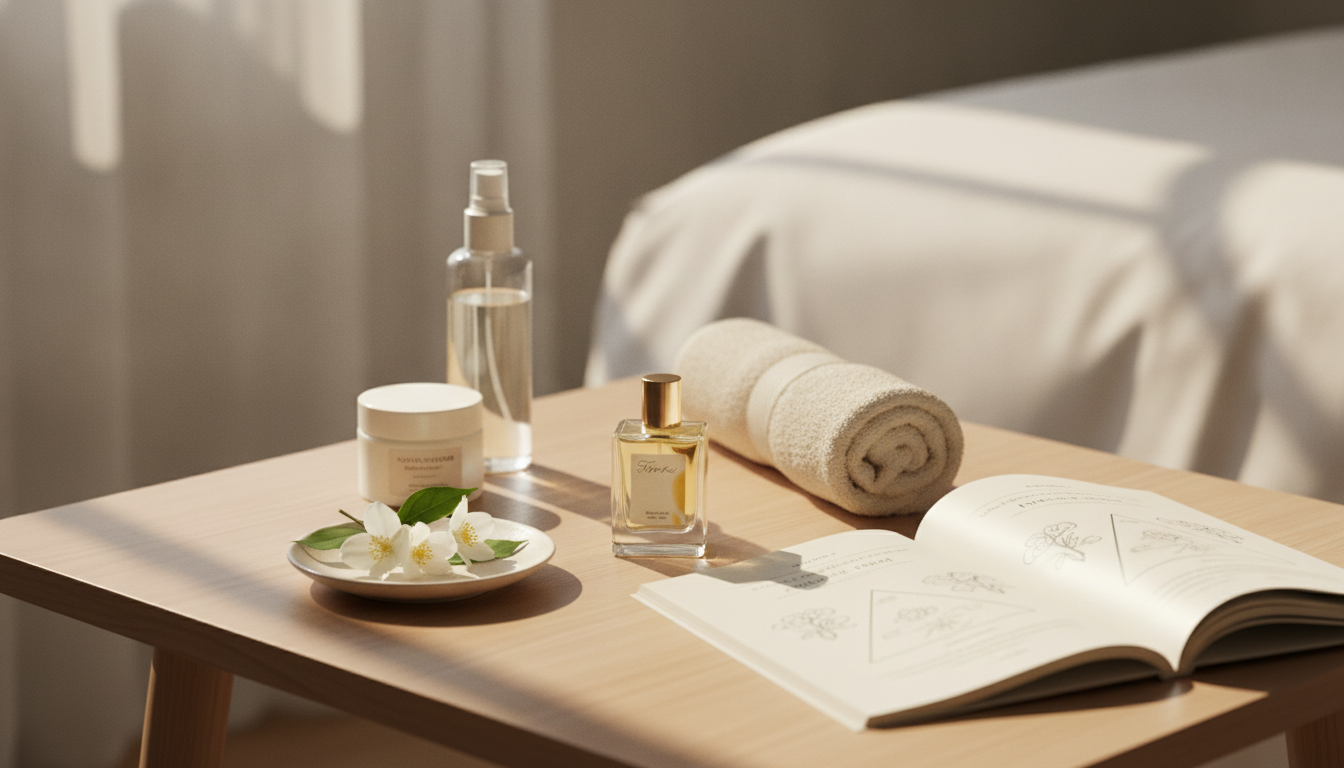
Fragrance layering is the practice of combining scented products—like perfumes, body lotions, oils, and mists—to create a custom scent that evolves beautifully and lasts longer. For beginners, the process is easiest when it follows a few simple rules: understand how notes behave over time, choose compatible scent families, control strength with placement and dosage, and test combinations in a repeatable way. The result can be a signature scent that feels personal without needing a huge collection. For more guidance, see Fragrance Layering 101: Basics for Beginners – Scento.
What fragrance layering is (and why it smells different on everyone)
Layering happens when two or more scented products overlap on skin, so their notes unfold together across time instead of in isolation. Even when you copy someone else’s “perfect combo,” it can smell noticeably different because fragrance is influenced by skin chemistry, temperature, hydration level, and your natural body scent. For further reading, see Fragrance Layering 101: The Ultimate Guide for Beginners – Layermor.
The most wearable blends usually have a clear structure: one scent leads while another supports, or one “bridges” two contrasting profiles (for example, a clean musk that smooths a sharp citrus into a cozy vanilla). Layering can also improve longevity when you add a creamy or oily base—like an unscented lotion or a light fragrance oil—because it helps slow evaporation.
For safety and consistency, stick to products used as intended and follow industry guidance where available, such as the International Fragrance Association (IFRA) Standards.
How fragrance “notes” and evaporation make layering work
Layering is easiest when you understand the timeline of notes. Top notes give the first impression and lift quickly; heart notes shape the “main personality”; base notes linger the longest and often determine warmth and depth. The most harmonious layers usually happen when the base of one fragrance complements—or “locks into”—the heart of another.
Because a blend can shift over hours, test any combo for at least 2–4 hours before deciding it works. Your nose can also adapt quickly, so checking in at set intervals helps you judge more accurately.
Quick guide to building a balanced layered scent
| Layer role |
Common note types |
What it contributes |
Beginner tip |
| Base anchor |
Vanilla, amber, musk, woods |
Longevity, warmth, depth |
Start with 1–2 sprays max (or a small dab of oil) |
| Heart character |
Rose, jasmine, spice, fruity notes |
Main personality of the blend |
Choose one clear “star” fragrance to lead |
| Top lift |
Citrus, green, aromatic notes |
Freshness and sparkle |
Add last; use lightly so it doesn’t dominate |
Simple layering method for beginners (repeatable and low-risk)
If layering has ever turned into a “too much at once” situation, a repeatable routine fixes it fast. Start with only two fragrances and give each one a job.
- Pick a base scent that’s smooth and versatile: clean musk, soft vanilla, light woods, or gentle amber.
- Choose a feature scent with a distinct vibe: bright citrus, floral bouquet, cozy gourmand, or spicy resin.
- Use the same test routine each time: same skin area, same number of sprays, same waiting intervals.
- Try the 1–2 rule: 1 spray of the stronger scent + 2 sprays of the lighter scent, then adjust next wear.
- Test on skin first, then try clothing only after confirming the blend doesn’t turn sharp or powdery.
- Write it down (combo, placement, and timing) so the best results are easy to recreate.
If you want structured practice pairings and troubleshooting checklists, The Art of Fragrance Layering Made Simple – A Beginner-Friendly Ebook Explaining what is fragrance layering and how it works is designed to help you build blends methodically rather than guessing.
Layering combinations that usually work well
Some pairings are simply easier for a beginner nose because they “agree” quickly in the dry-down. These are reliable starting points:
- Fresh + warm: citrus or neroli over vanilla/amber for a clean but cozy feel.
- Floral + musk: soft white florals paired with clean musk for an effortless “skin scent” effect.
- Woody + gourmand: sandalwood or cedar with a subtle caramel/vanilla for depth without heaviness.
- Green + floral: tea/fig/green notes to modernize classic florals.
- Spice + sweet: cardamom or cinnamon with vanilla for a balanced, comforting profile.
One caution that saves time: avoid stacking multiple heavy bases (several ambers/resins at once) until you’ve learned how those dense materials behave on your skin. If a blend feels thick, brighten it with a top-lift spray rather than adding more warmth.
For broader fragrance education and events that highlight how notes and perfumery styles are categorized, the Fragrance Foundation is a helpful reference.
Where to apply layered fragrances for the best effect
If you like carrying a small scent wardrobe for reapplication (such as travel sprays or blotters), a compact everyday bag can help keep items organized—like the Elegant Leather Moon-Shaped Shoulder Bag.
Common layering mistakes (and how to fix them fast)
A beginner-friendly guide to practicing layering step by step
For guided pairings and a clear “base/heart/top” approach that’s easy to practice, keep The Art of Fragrance Layering Made Simple – A Beginner-Friendly Ebook Explaining what is fragrance layering and how it works as a reference when you test.
FAQ
Does fragrance layering make perfume last longer?
It can. Adding a moisturizing layer (like unscented lotion or a light oil) can slow evaporation, helping base notes linger longer, but piling on extra sprays can backfire by becoming overwhelming.
How many fragrances should be layered at once?
Two is ideal for beginners. Three can work when each layer has a clear role (base/heart/top) and you keep dosage controlled while testing over several hours.
Can different brands be layered together safely?
Yes for typical consumer use, as long as you use products as directed. If you have sensitive skin, patch test and avoid spraying on irritated areas, and keep combinations simple to reduce scent fatigue.
Recommended for you












Leave a comment