Steady in Every Social Space: A Calm, Practical Guide to Social Confidence
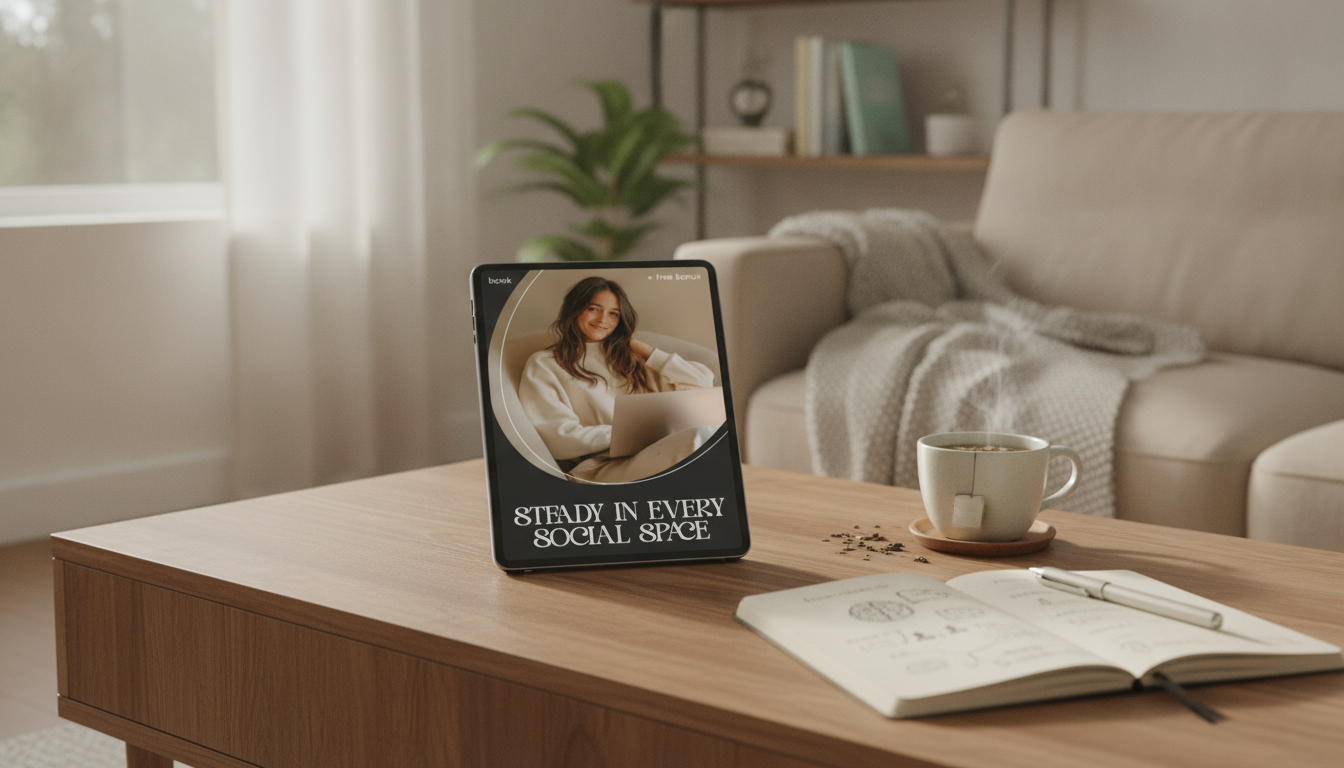
Social anxiety can show up anywhere—small talk, meetings, dates, parties, or even quick errands. Steady in Every Social Space – Digital Download is a practical eBook built around repeatable steps to calm the body, soften unhelpful thought loops, and build confidence through skills you can practice in real life. The goal isn’t to become “perfectly social,” but to feel steady enough to show up, speak up, and recover quickly when things feel awkward.
When social anxiety takes over: what’s happening in the moment
Social anxiety often feels personal—like something is “wrong” with you—but in the moment it’s usually a predictable pattern: the brain’s threat system misreads a social situation as danger and turns up your body’s alarm.
- Common patterns: overthinking, fear of judgment, “blank mind,” blushing, shaky voice, sweating, rapid heartbeat.
- Why it feels so intense: fight/flight/freeze can trigger fast, even when the “threat” is just being perceived by others.
- The anxiety–avoidance cycle: avoiding events or staying silent may bring relief short term, but it often teaches the brain that the situation truly is unsafe—making fear stronger next time.
- A steadiness mindset: progress comes from small exposures, skill practice, and a recovery approach that includes self-compassion after imperfect moments.
For additional background on how social anxiety is defined and commonly treated, see the National Institute of Mental Health overview and the American Psychological Association resources on anxiety.
What the Steady in Every Social Space eBook is designed to help with
The eBook is built for practical application—what to do during a conversation, what to practice between situations, and how to respond when your anxiety spikes anyway.
- Staying calm in conversations: tools to slow down, listen, and respond without rushing to “perform.”
- Building confidence through repeatable habits: small, realistic actions that compound over time.
- Handling uncomfortable moments: simple scripts and strategies for awkward silences, mistakes, or feeling judged.
- Reducing physical symptoms: grounding and breathing techniques to steady the nervous system.
- Creating a personal plan: choosing situations to practice and tracking wins without perfectionism.
Quick view: who it’s for and what changes to expect
| Situation |
What it can feel like |
A practical skill to practice |
What “steady” can look like |
| Work meetings |
Worry about sounding dumb or being put on the spot |
Prepare 1–2 key points + slow exhale before speaking |
Contribute once, even briefly, and stay present afterward |
| Parties and group settings |
Fear of awkwardness; trouble joining conversations |
Use a “curiosity question” opener + focus on one person at a time |
One solid conversation is enough; leave without self-criticism |
| Dating and social plans |
Pressure to impress; overanalyzing messages and reactions |
Name the anxiety, return to values, ask direct questions |
Be authentic, tolerate uncertainty, and recover from stumbles |
| Everyday errands |
Feeling watched; racing thoughts in simple interactions |
Grounding: feel feet, notice 3 sounds, soften jaw |
Short interactions feel manageable rather than threatening |
Core skills that build calm in any social situation
Steadiness isn’t one “big confidence moment.” It’s a set of portable skills you can use at a cashier line, in a meeting, or at a friend’s birthday dinner.
- Body-first regulation: longer exhales, relaxing the face/jaw/shoulders, and orienting to the room (quietly noticing color, shapes, and sound) to signal safety.
- Thought defusion: noticing anxious thoughts as mental events, not facts that must be solved right now (for example: “My mind is offering the ‘They’ll judge me’ story.”).
- Attention training: shifting focus from self-monitoring to external cues—what’s being said, tone, context, and what the other person might need.
- Values-based action: choosing behavior based on what matters (connection, honesty, growth) rather than fear’s short-term demands.
- Micro-exposures: small, planned steps that teach the brain the situation is survivable—especially when you stay a little longer after the anxiety peaks.
A simple practice plan for the next 14 days
Consistency beats intensity. A plan works best when it’s realistic enough to repeat on tired days and busy days.
Using the eBook effectively: turning reading into results
If you like to keep your calm tools accessible, a small everyday carry item can help. Some people keep notes and prompts in a dedicated bag they grab before heading out, such as the Elegant Leather Moon-Shaped Shoulder Bag. And if your calm kit includes audio (a grounding track or paced breathing timer), a reliable travel charger like the 66W 5A Fast Charging Spring Retractable USB Type C Cable – For Car & On-the-Go can make it easier to practice consistently on commutes or between errands.
Product details: Steady in Every Social Space (Digital Download)
Steady in Every Social Space – Digital Download
FAQ
Can this help if social anxiety shows up as physical symptoms like shaking or blushing?
Yes—body-first tools like slow breathing, grounding, and muscle relaxation can reduce the intensity of physical symptoms over time, especially when paired with gradual exposure. If symptoms feel overwhelming or interfere with daily functioning, professional support can be an important next step.
How quickly can social confidence improve with consistent practice?
Many people notice early shifts within a few weeks when they practice frequently in low-stakes situations. Confidence tends to grow through repetition and recovery—showing up, trying, and bouncing back—rather than getting every interaction “right.”
Is this a good fit if the fear is mostly about being judged or saying the wrong thing?
It can be a strong fit: skills like thought defusion, attention shifting, and simple conversation scripts help reduce the urge to overanalyze. Over time, the goal becomes tolerating uncertainty and responding kindly after mistakes instead of treating them as proof you “failed.”
Recommended for you












Leave a comment