Sleep Peacefully Checklist: A Calming Night Routine for Anxiety and Depression
Rest can feel out of reach when the mind is loud, the body is tense, or sadness makes everything heavier. A simple, repeatable routine can reduce decision fatigue at night and create a sense of safety and predictability. This guide walks through a gentle evening structure and how to use a printable checklist to make the steps easier to follow—especially on hard days.
Why nights feel harder with anxiety and depression
Anxiety and depression can make bedtime feel like a spotlight moment—quiet enough for worry loops, self-criticism, and physical tension to take center stage. When the nervous system stays in “high alert,” the body may feel tired while the brain keeps scanning for problems.
Depression can shift sleep timing (sleeping too much or too little) and reduce the motivation to do basics that support rest—like brushing teeth, preparing clothes for tomorrow, or even turning off lights. Add irregular schedules, late-day caffeine, alcohol, or screen stimulation, and falling asleep (or staying asleep) can get even harder.
A predictable wind-down routine works like a gentle signal: “It’s safe to power down.” Over time, repetition can help the body recognize the transition from day mode to rest mode.
What a sleep checklist does (and what it doesn’t)
A checklist turns a vague goal (like “go to bed earlier”) into small actions you can follow in order. It reduces mental load by removing the need to decide what comes next when energy is low, and it supports consistency—one of the strongest levers for improving sleep over time.
At the same time, a checklist is not medical care. It doesn’t replace treatment for anxiety, depression, insomnia, or other sleep disorders. If symptoms are intense or persistent, it’s wise to bring sleep concerns to a licensed clinician.
For best results, keep it flexible: have a “minimum version” for rough nights and an “ideal version” for better nights. The win is showing up to the routine, not doing it perfectly.
How to use the printable Sleep Peacefully Checklist
To make a checklist feel supportive rather than demanding, set it up for easy success:
- Print one page for daily use or keep a few copies near the bed with a pen or highlighter.
- Pick a realistic start time (often 45–90 minutes before bed) and set a gentle reminder.
- Follow the checklist in the same order most nights; consistency matters more than perfection.
- If a step feels too hard, swap it for a smaller version (for example, “brush teeth” becomes “rinse and mouthwash”).
- Track patterns for a week: what helps most, what triggers stress, and where you want to simplify.
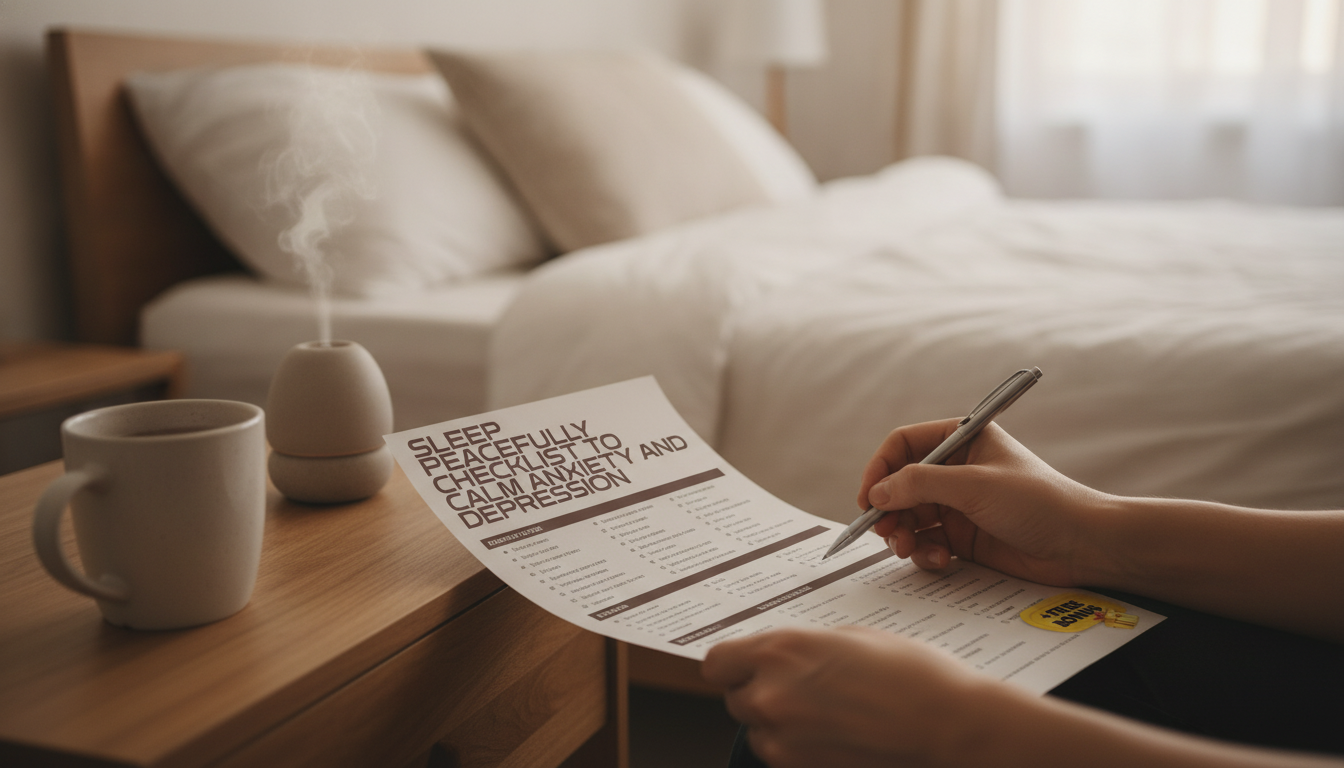
If you want a ready-made option, Sleep Peacefully Checklist to Calm Anxiety and Depression (Printable PDF) is designed to be clear, quick to follow, and easy to reuse nightly.
A calming evening routine that fits anxiety and depression
A helpful routine is less about “doing everything” and more about creating a steady ramp down. Start with environment, then mind, then body:
Routine options by energy level
| When it’s a low-energy night |
When it’s an average night |
When it’s a high-anxiety night |
| Minimum hygiene + change into sleep clothes |
Light tidy + hygiene + set out tomorrow’s essentials |
Write worries + slow breathing (3–5 minutes) + grounding exercise |
| Set phone away + dim lights |
No screens 30 minutes before bed |
Reduce stimulation: low light, quiet audio, simple repetitive activity |
| One calming cue (warm drink, lotion, or music) |
Short stretch or warm shower |
Body scan or progressive muscle relaxation |
| In bed at a consistent time |
In bed at a consistent time |
In bed at a consistent time, even if sleep comes later |
How to calm the mind when thoughts keep returning
Setting up a sleep-friendly environment without overhauling everything
If charging your phone away from the bed is easier with a longer or more convenient cable, the 66W 5A Fast Charging Spring Retractable USB Type C Cable – For Car & On-the-Go can help keep devices powered while maintaining more distance from late-night scrolling.
What to do on nights when sleep still doesn’t happen
For additional guidance, reputable resources include the CDC’s sleep information and the National Institute of Mental Health pages on depression and anxiety disorders.
Printable resource: Sleep Peacefully Checklist to Calm Anxiety and Depression
A printable checklist can be a steady anchor when motivation is low or worry is high. Sleep Peacefully Checklist to Calm Anxiety and Depression (Printable PDF) is designed as a clear, step-by-step routine you can reuse daily and keep by the bed, on a clipboard, or on the fridge. It also works well alongside therapy tools, sleep hygiene habits, and coping strategies you’ve discussed with a clinician.
FAQ
How long should a bedtime routine take if anxiety is high?
Aim for a flexible range, anywhere from 15 to 90 minutes. On tough nights, use a minimum routine (just a few essentials) and prioritize consistency over duration.
What if the checklist makes bedtime feel like another task to fail?
Treat it like a menu instead of a test: pick 3–5 essentials and check off effort rather than outcomes. Keeping the tone gentle (and allowing “good enough” steps) helps it feel supportive.
When should someone seek professional help for sleep issues with anxiety or depression?
Seek help if insomnia persists for weeks, mood worsens, panic increases, medications feel involved, or a sleep disorder (like sleep apnea) is suspected. If there are suicidal thoughts or safety concerns, contact a healthcare professional immediately or use local emergency/crisis resources.
Recommended for you












Leave a comment