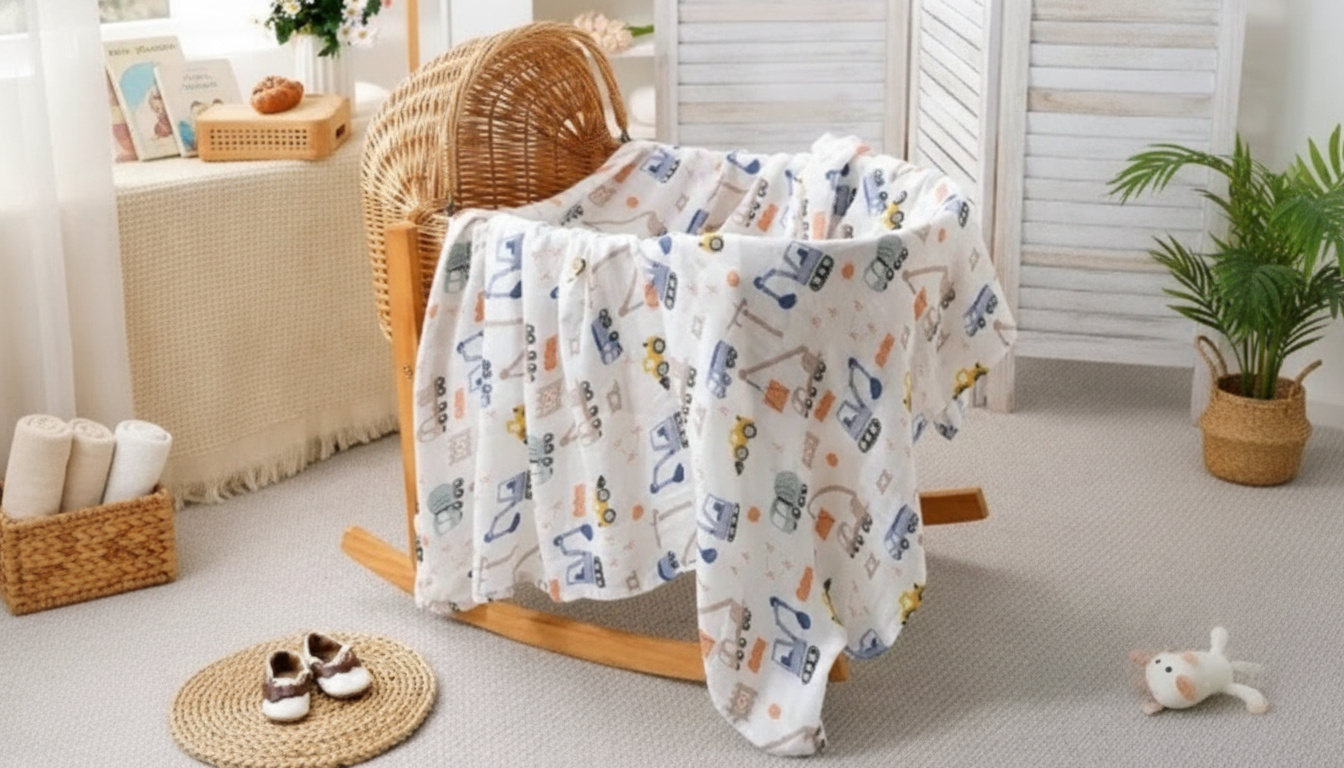
A breathable swaddle can make daily routines—sleep, feeding, burping, and on-the-go comfort—feel simpler and gentler. The Soft Bamboo Cotton Muslin Newborn Swaddle & Receiving Blanket is designed to feel soft against newborn skin while staying light and flexible for everyday use. Muslin’s airy weave and the bamboo-cotton blend are a popular pairing for families who want a blanket that folds small, launders easily, and can switch roles throughout the day.
What This Swaddle & Receiving Blanket Is Used For
One of the most helpful newborn essentials is the one that does more than one job. A muslin swaddle/receiving blanket often becomes a “grab-first” item because it adapts quickly to different moments.
- Swaddling for calmer settling: wraps snugly while keeping the fabric light and breathable.
- Receiving blanket for first days: a soft layer for cuddles, carrying, and quick warmth after feeds.
- Stroller or car-seat cover (supervised): provides a light barrier from sun or breezes without heavy bulk.
- Burp cloth and feeding support: helps protect clothing during spit-ups and milk dribbles.
- Changing surface in a pinch: lays down a clean, soft layer when away from home.
Why Bamboo-Cotton Muslin Feels Different
Not all blankets feel the same, even when they look similar. Bamboo-cotton muslin is often chosen for how it balances softness with airflow—especially useful when babies run warm or when the house temperature changes throughout the day.
- Muslin-style weave: typically lightweight and breathable, helping reduce stuffiness during naps and cuddles.
- Bamboo + cotton blend feel: often chosen for softness and a smoother hand-feel than many thicker blankets.
- Flexible drape: makes wrapping and folding easier than stiff fabrics, especially for new swaddlers.
- Year-round practicality: works as a light layer in warm months and a versatile accessory in cooler months (paired with appropriate sleep clothing).
Comfort and Safety Notes for Swaddling
Swaddling can be soothing, but it should always be done with safe-sleep guidance in mind. For the most up-to-date recommendations, review the American Academy of Pediatrics safe sleep guidance and related resources like HealthyChildren.org’s swaddling safety overview and the U.S. Consumer Product Safety Commission safe sleep guidance.
- Back sleeping only: always place babies on their backs for sleep; use a flat, firm sleep surface with no loose bedding.
- Snug chest, roomy hips: keep swaddling snug around the torso but allow room for hips and legs to move; avoid overly tight wrapping.
- Know when to stop: stop swaddling when signs of rolling appear; transition to a sleep-appropriate alternative if needed.
- Prevent overheating: dress baby appropriately for the room and monitor for sweating or a hot chest/back.
- Supervised coverage only: use only under supervision for non-sleep uses like stroller coverage; maintain airflow around baby.
Everyday Care: Washing, Drying, and Keeping It Soft
Muslin blankets are meant to be used often, which also means they’re meant to be washed often. A consistent, gentle routine helps keep the fabric comfortable and minimizes buildup that can make textiles feel stiff.
- Pre-wash before first use: removes packaging residue and starts the fabric’s natural softening cycle.
- Choose a gentle detergent: fragrance-free options can be helpful; avoid harsh additives that may build up on fabric.
- Wash with similar soft items: reduces abrasion; consider a mesh laundry bag if snagging is a concern.
- Dry with care: tumble dry low or line dry to help preserve softness and reduce shrink risk; remove promptly to limit wrinkles.
- Skip fabric softener if needed: softener can reduce absorbency; try an extra rinse if the fabric feels coated.
When to Use a Swaddle vs. a Receiving Blanket
Common Use Cases and What to Prioritize
| Use case |
What matters most |
Helpful tip |
| Swaddling (sleep/settling) |
Breathability, softness, wrap-ability |
Keep hips/legs roomy; stop when rolling starts |
| Receiving after feeds |
Soft feel, easy to launder |
Keep a spare nearby for quick changes |
| Burping/shoulder cloth |
Absorbency, size that stays put |
Fold into layers for extra protection |
| Stroller cover (supervised) |
Lightweight fabric, airflow |
Avoid draping tightly; check baby’s temperature |
| On-the-go changing layer |
Cleanability, quick-dry |
Carry in a small wet/dry bag |
Product Snapshot and What to Expect
If you’re building a practical “grab-and-go” setup for outings, a couple of small extras can make the day smoother. A compact charging option like the 66W 5A Fast Charging Spring Retractable USB Type C Cable – For Car & On-the-Go can help keep your phone powered for navigation or baby tracking apps, and a hands-free carry option like the Elegant Leather Moon-Shaped Shoulder Bag can be a simple way to keep essentials accessible when one arm is busy.
FAQ
Is bamboo-cotton muslin suitable for newborn skin?
Bamboo-cotton muslin is commonly chosen because it tends to feel soft and breathable against delicate skin. Pre-wash before first use with a gentle detergent, and if your baby is especially sensitive, monitor for any irritation and adjust products accordingly.
When should swaddling be stopped?
Swaddling should be stopped when a baby shows signs of rolling or attempting to roll. Follow your pediatrician’s guidance and transition to a sleep-appropriate alternative while continuing to place baby on their back on a firm, flat surface without loose bedding.
How many swaddle/receiving blankets are practical to have?
For most households, 2–4 blankets is a realistic, practical range depending on laundry frequency. Spit-ups, milk dribbles, and middle-of-the-night changes can make backups especially useful since one blanket often rotates through multiple roles in a single day.
Recommended for you











Leave a comment