What makes five-year goals work (and why they often don’t)
A five-year goal can be freeing because it creates room to grow without the pressure of instant results. That same distance, though, can quietly encourage procrastination. When the finish line is far away, it’s easy to tell yourself you’ll “start next month” and still feel like you’re on track. The fix is simple: keep the long horizon, but build short checkpoints that make progress obvious week to week.
Goals also tend to stick when they’re specific, measurable, and tied to a meaningful reason. It’s one thing to say “get in shape.” It’s another to say “run a half marathon comfortably because I want energy for travel and weekends with my family.” When the goal matches values, identity, and lifestyle, it feels less like a task list and more like a direction.
The most effective plans include both outcomes (what you want) and systems (how you’ll get there). Outcomes are the destination; systems are the habits, schedules, environments, and tracking that make the destination likely. Motivation comes and goes, so design matters more than willpower. Reduce friction for the behaviors you want, and add cues that pull you forward even on busy days.
Start with a five-year vision you can actually use
A usable five-year vision isn’t a vague montage of “success.” It’s a practical snapshot that helps you make decisions in real life. Start by choosing 3–5 life areas to plan across—common ones include career, health, relationships, finances, and learning. This prevents you from over-optimizing one category while ignoring the rest.
Next, write a “five-year snapshot” describing a normal week in that future. What time do you wake up? What kind of work fills your days? How’s your energy? What routines are consistent? What do weekends look like? The goal is to make the future concrete enough that you can reverse-engineer it.
Then, pick one primary theme for the next year that supports the five-year direction. A theme acts like a filter: it helps you say no to goals that sound impressive but don’t actually fit your priorities. Finally, set constraints up front—time, budget, family responsibilities, and health realities—so the plan is built for your life, not an imaginary one.
Five-year goals that translate into action
| Life area |
Five-year outcome |
This-year focus |
Next 90 days |
| Health |
Run a half marathon comfortably |
Build consistent aerobic base |
Walk/run 3x per week + strength 2x per week |
| Career |
Move into a lead role |
Strengthen a core skill + visibility |
Complete one portfolio project + share updates monthly |
| Finances |
Build a 6-month emergency fund |
Automate saving |
Set up auto-transfer + reduce 1 recurring expense |
| Learning |
Become fluent for travel/work |
Daily practice system |
20 minutes/day + weekly conversation practice |
Turn big goals into targets: outcomes, milestones, and behaviors
To turn a big goal into something trackable, write it in a clear format: outcome + metric + deadline. For example, “Save $10,000 by Dec 31” or “Complete a professional certificate by September 15.” This style forces clarity and makes it easier to tell whether the plan is working.
Next, create milestones that build momentum. A five-year goal can still have quarterly or monthly checkpoints—those checkpoints keep you honest and reduce the temptation to cram progress into the final months. Milestones should be realistic enough to hit, but meaningful enough that hitting them matters.
For more on structuring clear goals, SMART goal guidance can be a helpful baseline. The APA Dictionary of Psychology defines a SMART goal, and the American Psychological Association also shares practical tips for making goals a reality.
Build a digital goal system that stays organized
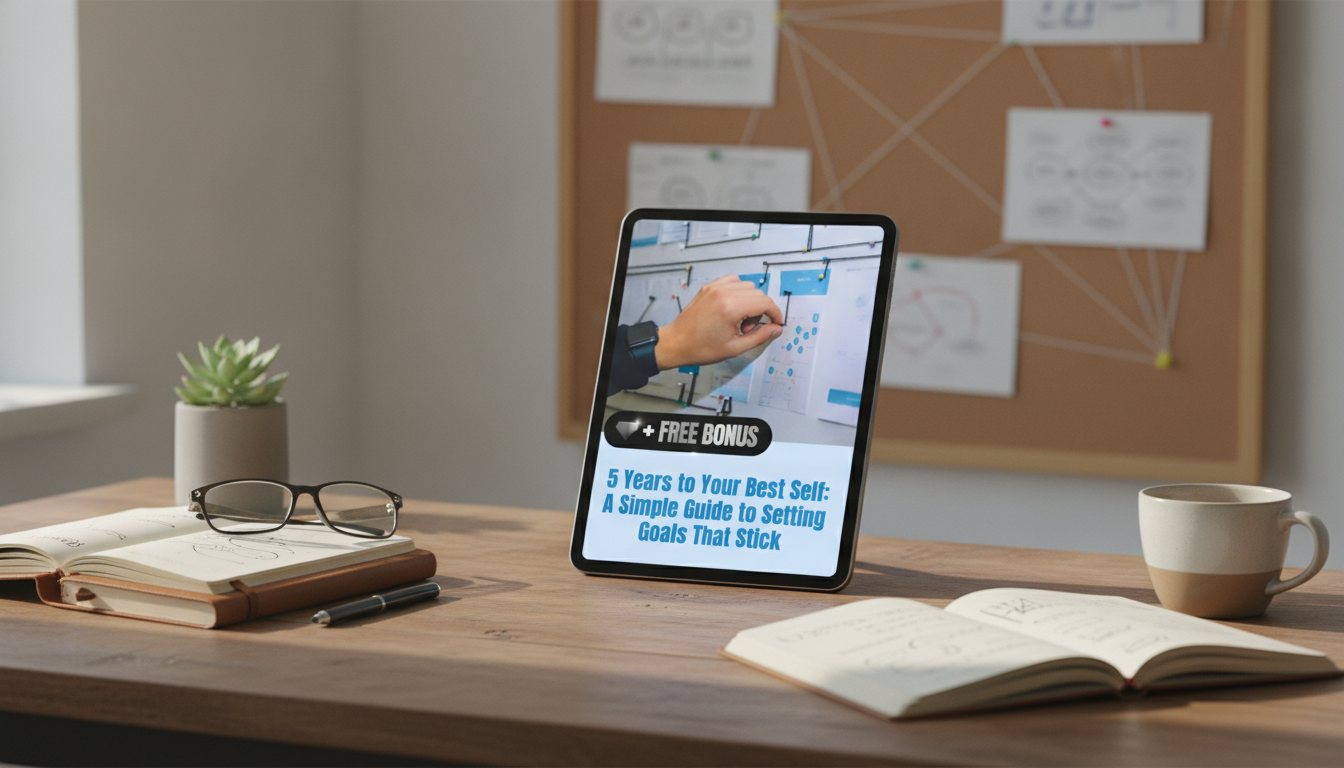
If you like guided structure without building everything from scratch, 5 Years to Your Best Self: A Simple Guide to Setting Goals That Stick (Digital eBook) is designed around turning long-term direction into milestones, routines, and reviews you can repeat each season.
Make goals stick with environment design and accountability
For staying consistent when your plan is mobile (commutes, travel, coffee-shop work blocks), a reliable charging option helps remove a small but common friction point. The 66W 5A Fast Charging Spring Retractable USB Type C Cable – For Car & On-the-Go is an easy add-on for keeping your phone or tablet ready for timers, reminders, and weekly reviews.
When life changes: how to adjust without quitting
Digital eBook: 5 Years to Your Best Self
5 Years to Your Best Self: A Simple Guide to Setting Goals That Stick (Digital eBook) is a structured, step-by-step guide for shaping five-year goals into an actionable plan you can run week after week. It’s built to help clarify priorities, create milestones, and establish a review rhythm that supports consistency beyond the initial burst of motivation.
FAQ
How many goals should be in a five-year plan?
Aim for a small set—about 3 to 7 total goals across your key life areas. Focus protects capacity, and you can create multiple milestones per goal instead of adding more goals that compete for time and attention.
What’s the difference between a milestone and a habit?
A milestone is a checkpoint result (for example, “save $2,500 by the end of Q1”), while a habit is a repeatable behavior that makes that result likely (for example, “auto-transfer $200 every Friday”). Milestones measure progress; habits create it.
How often should goals be reviewed to stay on track?
A weekly quick review keeps actions aligned, while a monthly or quarterly deeper check helps you adjust milestones and timelines. Watching leading indicators (like sessions completed) makes it easier to correct course before results drift.
Recommended for you













Leave a comment